Table of contents
At N.Rich, we generated over $1 million in won revenue and $13 million in pipeline from events over the past year. This post breaks down exactly how we did it: the model, the numbers, how marketing and sales actually work together, and the AI we use to remove the manual overhead.
We're sharing this because most event ROI content is either too vague to act on or only works if you're running events at Salesforce scale. We're a challenger brand in the ABM platform space, running events in Europe with a growing US presence. If that sounds like you, this should be directly useful.
The model: dinners over conferences over webinars
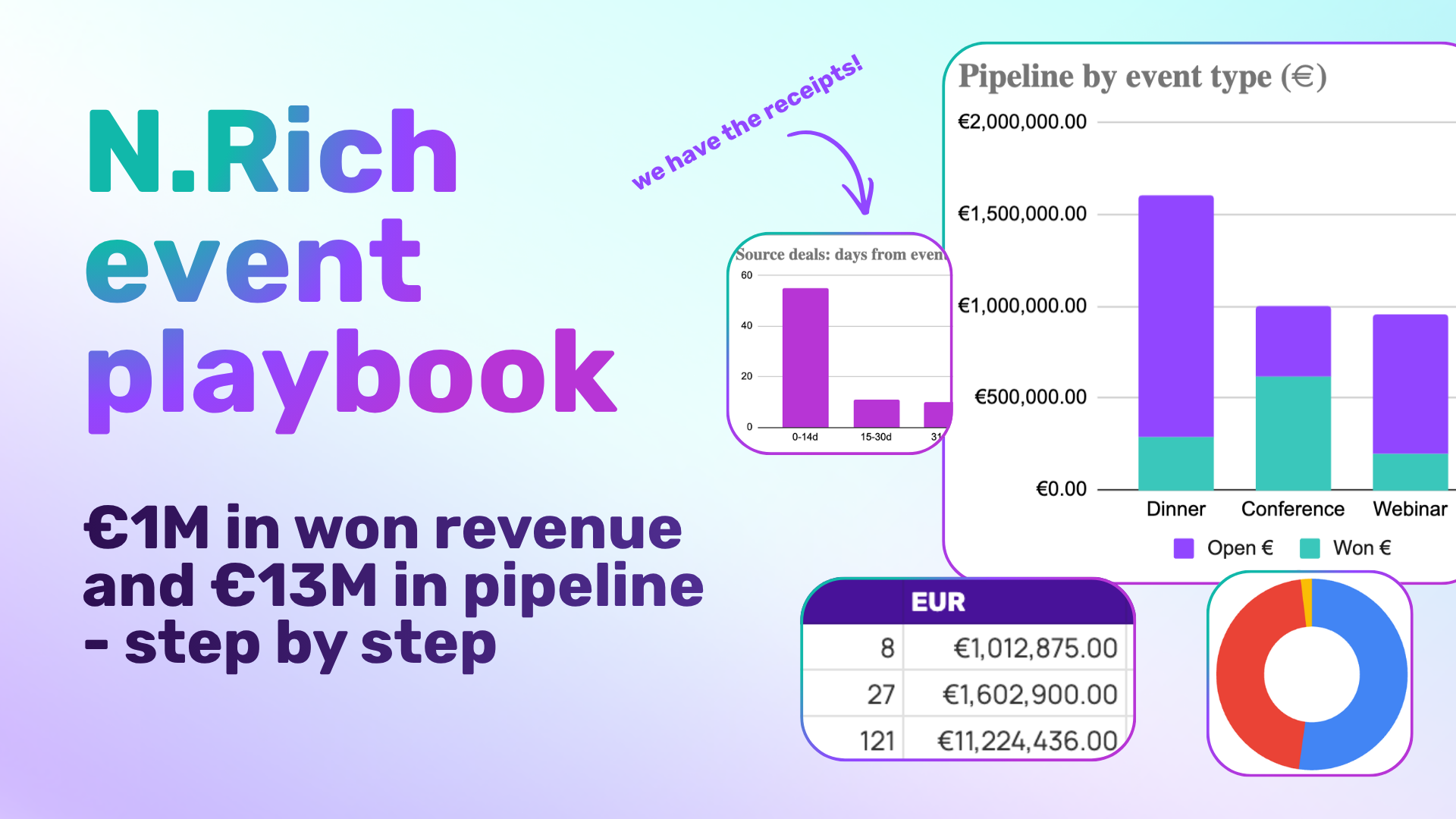
This is our reported ROI on events throughout 2025 and 2026:
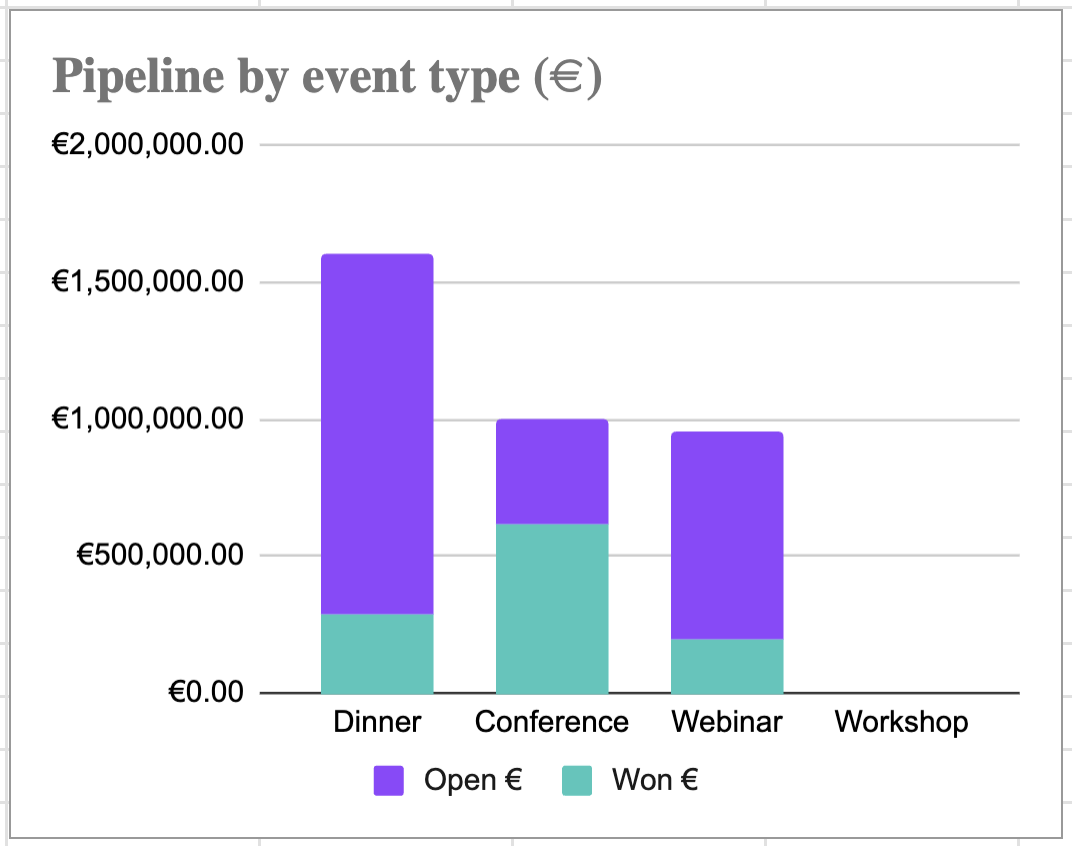
Exclusive dinners generate significantly more pipeline per euro than any other format.
Think of it as the ABM parallel: dinners are 1:1 and 1:few, conferences are 1:many, webinars are broadcast. Your budget should follow the same logic your ABM motion does - allocate more to the formats that reach the right accounts with the highest touch.
The main qualification remark: this only makes sense if your ACV justifies it. If a single deal can cover the cost of several dinners, dinners are ROI-positive by design. We'd put the threshold at around $50k+ ACV, and at $100k+ it becomes the obvious default.
The numbers: what we actually generated
Here's where the pipeline landed:
- $1M+ won
- $1.6M open
- $11M "meaningful ICP connections"
That last number is the one that causes the most questions in leadership reviews. The instinct is to call it lost pipeline. But you need to push back on that framing.
High-touch events - dinners, round tables - with the right accounts are a long-term asset.
The relationship was built.
The deal may need more time.
If you measure win rate, deal cycle, and ACV from the cohort of event-influenced accounts separately, you'll almost always see they perform better than average pipeline over time. Track those accounts separately, and make sure the event attribution stays visible when they come back.
Rebranding it as "meaningful ICP connections" isn't spin. It's a more accurate description of what happened — and it gives you the right framework to measure it.
New logos or reactivated accounts?
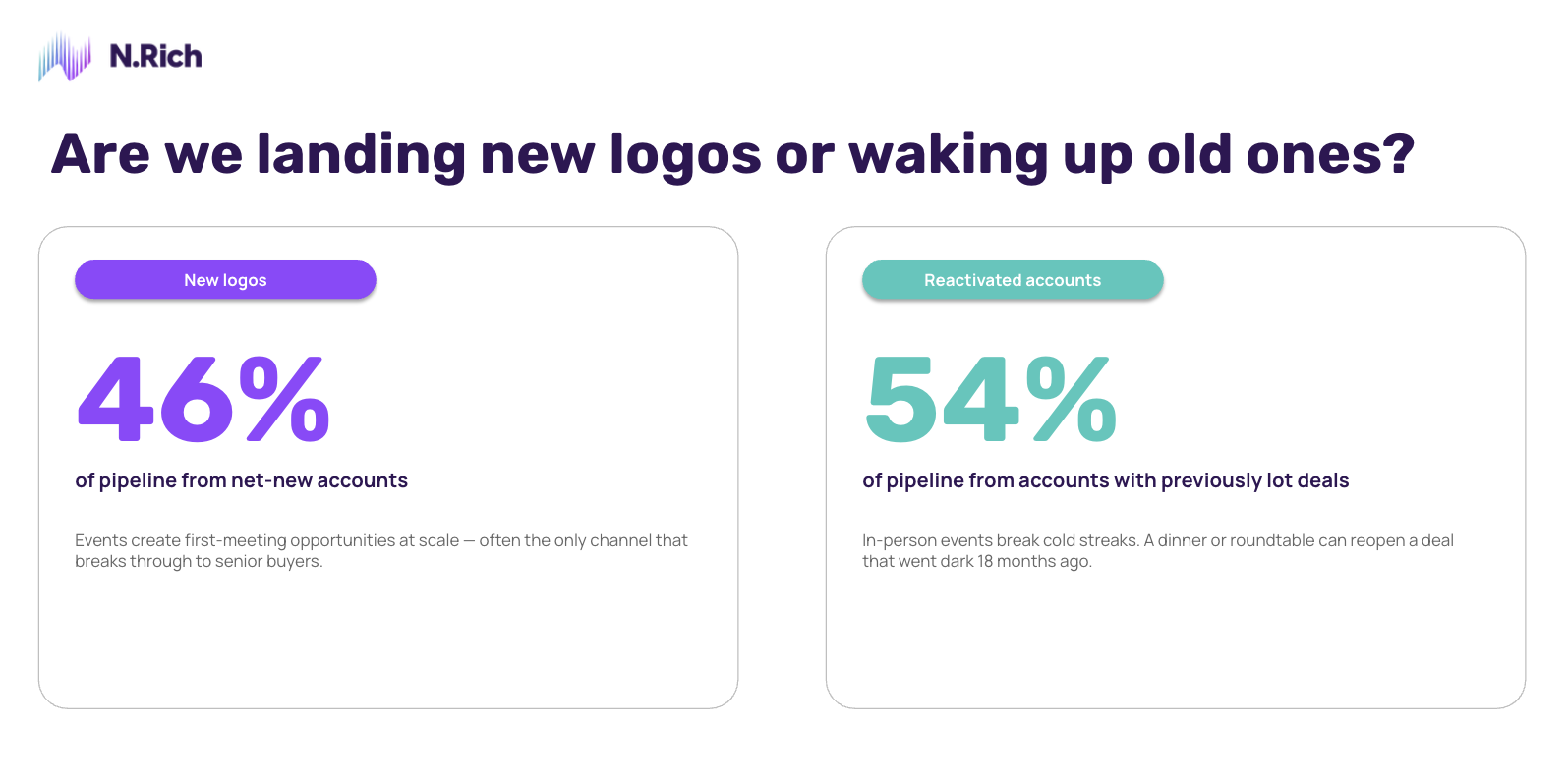
46% of our event pipeline came from net-new accounts. 54% came from accounts with previously lost deals.
If your event ROI report only counts "new leads generated," you're measuring roughly half the real impact - and often not the most valuable half. Reactivated accounts already understand the problem, already know your product, and the relationship is warm. They tend to close faster and at higher ACV than cold pipeline.
Events do three distinct jobs:
1. Awareness (first exposure to accounts that would never find you through inbound)
2. Activation (getting dark accounts back into a conversation)
3. Reactivation (giving previously closed-lost accounts a reason to re-engage without it feeling awkward).
All three should show up in your reporting. Most of the time, only the first one does.
Common mistake: Most event ROI calculations count only new leads. If that's your metric, you might be reporting as little as 10% of actual impact. Always report reactivated and churned accounts separately.
The attribution question
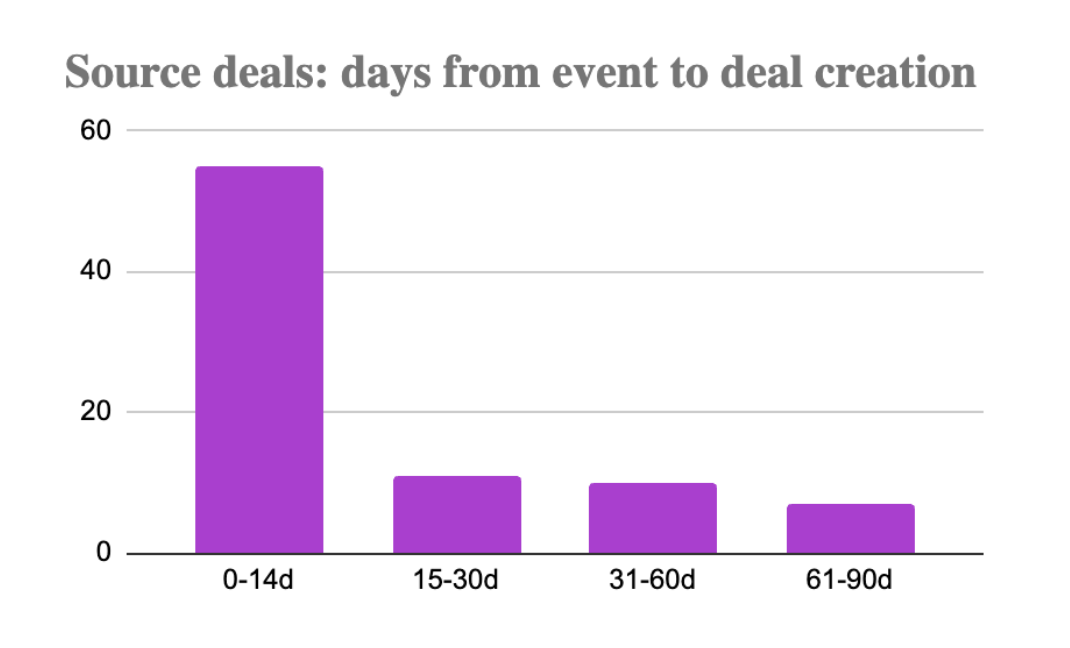 The question we get asked most about events is attribution: how long do you wait, and how do you isolate event impact from everything else running at the same time?
Our data shows the majority of event-influenced deals are created within 14 days of the event. That's not because events magically close pipeline in two weeks - it's because we have clear SLAs and a sales team that's actually motivated to follow up. The timeline reflects process discipline more than anything inherent to events.
Our approach to the attribution question:
- Measure generously, aim tight. Set a 90-day attribution window for analysis. Push hard for deal creation within 14 days via SLAs. The window is for reporting; the SLA is for accountability.
- Use multi-touch attribution. That conference touchpoint 12 months before close should count. We use Mixbound for this — every marketing interaction, including event first-touch, is visible in revenue calculations. The classic failure mode is a prospect whose first contact with your brand was your conference booth in January who signs in December. Without multi-touch, that contribution disappears, and your event budget gets harder to justify every year.
- If deals only convert 12-24 months after an event, that's not an events problem. That timeline usually means weak SLAs, slow follow-up, or a sales team that isn't activated on event leads. The event did its job. The follow-up didn't happen on time, or wasn't good enough.
Marketing planning: what it looks like
Events don't succeed on the day. They succeed or fail in the months before it.
ICP alignment first
Every person touching event execution - marketing, BDRs, AEs - has to be able to classify any contact as ICP or non-ICP without internal debate. If your team is arguing over whether a signup qualifies, you have a setup problem, not an event problem. ICP definition has to be locked before the first invitation goes out.
We use Dora, our AI research agent, to pull CRM data and enrich every new contact before anyone wastes time on manual qualification. More on that in the AI tools section below.
The calendar: 4-6 months out, hard rule
The calendar is built with sales, 4-6 months ahead. This is a hard rule for everyone including C-level - we don't accept last-minute event ideas.
Validate the conference before you book
Conference websites routinely claim 1,000 attendees for events that draw 100. Do the diligence before committing budget:
- Monitor the event hashtag on X and LinkedIn from previous editions
- Ask in Slack communities (RevOps Co-op, Pavilion): "Who's been to X? What's the real attendance?"
- Reach out to companies that sponsored or attended previous editions
- Double-check demographic claims: role split, company size, industry mix
Dual presence: sponsor + side event
If budget allows: sponsor the conference and host a side event (dinner or round table) at the same time. They amplify each other. Booth conversations become dinner invitations. Dinner guests visit the booth the next morning. The two formats feed each other in a way that neither does alone.
Pre-event brand awareness: the always-on layer
Your BDRs shouldn't have to explain what N.Rich does when they reach out. That's marketing's job, completed months before. Our stack:
- Always-on ABM campaigns targeting Tier 1-3 accounts (via N.Rich)
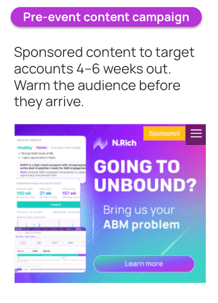
- Engaged / hot accounts pushed to LinkedIn campaigns with dinner-specific creative
- Email marketing for dinner invitations to warm accounts
- LinkedIn posts from the company page and all ICs and managers (total organic reach: 500K+ people)
Dinner details that actually matter
Seating is a strategy: one prospect + one existing customer + one company rep at every table. The customer shares real stories. The prospect gets an unfiltered view. The company rep gets market intelligence. Everyone wins.
At major conferences, you're competing with 5+ other dinner invitations on the same evening. Your ICP can afford a dinner. The competitive advantage is almost never the food - it's the people in the room and the personal connection with someone at your company. Design for that.
BDRs: the layer most event playbooks skip
BDRs are almost never counted as part of the event organizer team. They should be. Unless you're Salesforce - building awareness at scale through brand alone - you need people doing outbound and having 1:1 conversations. Marketing builds the early awareness layer. BDRs convert it into actual invitations and conversations.
If you don't have a BDR function, delegate to AEs or hire an external partner. Don't skip this layer completely.
The best BDRs treat their market as a community they're already part of. Event invitations work best when they feel like a natural continuation of an existing conversation — not a cold outreach campaign that happens to mention a dinner. One consequence: don't overrely on conference networking apps. They usually open 2 weeks before the event. By that point, invitations should already be running, spots should be nearly full, and the waitlist should be active.
Five plays that make a difference:
- State the obvious in the invitation. Mention explicitly that the guest doesn't pay for the dinner. This sounds unnecessary, but it isn't: even senior buyers ask this. Removing the ambiguity increases acceptance rates.
- Build a waitlist from day one. Last-minute cancellations happen at every event. If you don't have 5-10 qualified standby contacts, those spots go empty.
- The day-before reminder is mandatory. It recovers last-minute cancellations and confirms headcount. Skipping it is leaving pipeline on the table.
- When someone can't attend, send the webinar. If a target account declines the dinner, the webinar is the follow-up. Events create content; content feeds future events. Our Women in GTM awards became a webinar with the winners, which was a way for the whole community to connect even if they missed the dinner.
- Divide the post-event follow-up list with AEs before the event. AEs follow up with the people they personally spoke with on-site. BDRs handle the wider attendee list. Agree on this division in advance, not improvised the week after.
AEs: how sales make dinners our biggest pipeline generator
AEs are the people in the room. Their behavior during and after the event is what determines whether the marketing investment converts to pipeline. The formula we've landed on:
Anchor. Confirm the headline attendee — the person who makes others want to come. Build the guest list around them.
Build. Curate carefully. AEs review and approve each guest for fit and seniority. Don't approve too fast. This requires patience, but a room that's 50% right ICP is not a good dinner.
Invite. AEs send their own invitations to Tier 1 and Tier 2 targets, in addition to BDR and marketing emails. Overlap is fine. Buyers are busy — you need to be everywhere.
Gate. For well-known dinners with waitlists: collect phone numbers. "You're close to the top — leave your number and we'll call if a spot opens." Converts "maybe later" into committed pipeline.
Room. Be present. Do not pitch during the event. The dinner should be associated with your ICP having a great time with like-minded people. Pitching during the dinner reduces the quality of the experience for everyone and closes less pipeline.
Gift. 24 hours after the event: send the gift and ask for a meeting. Must be within 24 hours — after that it gets lost in the week. Another play that's worked: send an Uber voucher to the venue before the event. It signals "we really want you there," which is a different and more personal message than a standard invite.
Pipeline. CRM notes go in the same day, after the working day. This is a hard rule for everyone including C-level. Without notes, attribution disappears and the most useful post-event insights never get shared. Marketing has every right to manage up and enforce this one.
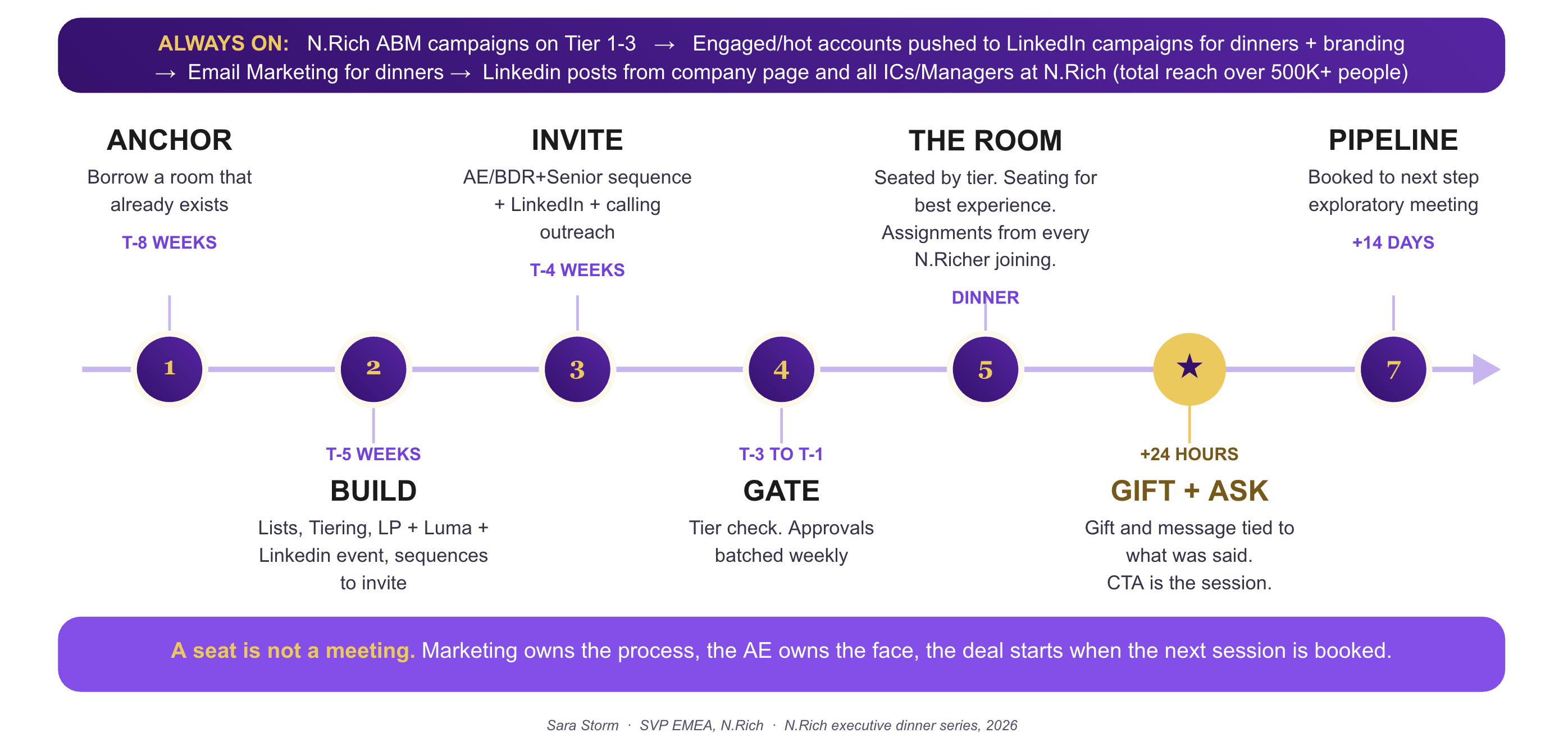
And here's what changed after we introduced this framework:
- Post-event response rate: 41%+ (up from 18%)
- Pipeline increase from structured follow-up: +32%
- Pipeline on best dinner follow-ups: +54%
Three non-negotiables on the AE side:
- Marketing can - and should - hold AEs accountable. If there's no CRM update and no meeting booked within 14 days, marketing has the right and the obligation to flag it.
- Get sales leadership on board early. If the VP of Sales isn't aligned on the program and follow-up SLAs, pipeline won't materialize in any measurable timeframe. Bring in external authority if needed, you don't have to carry this alone.
- No pitching at the event. The event is for connection. The pitch is for the meeting after.
The AI tools we use
We use two AI agents that sit in Slack and remove most of the manual overhead from event prep.
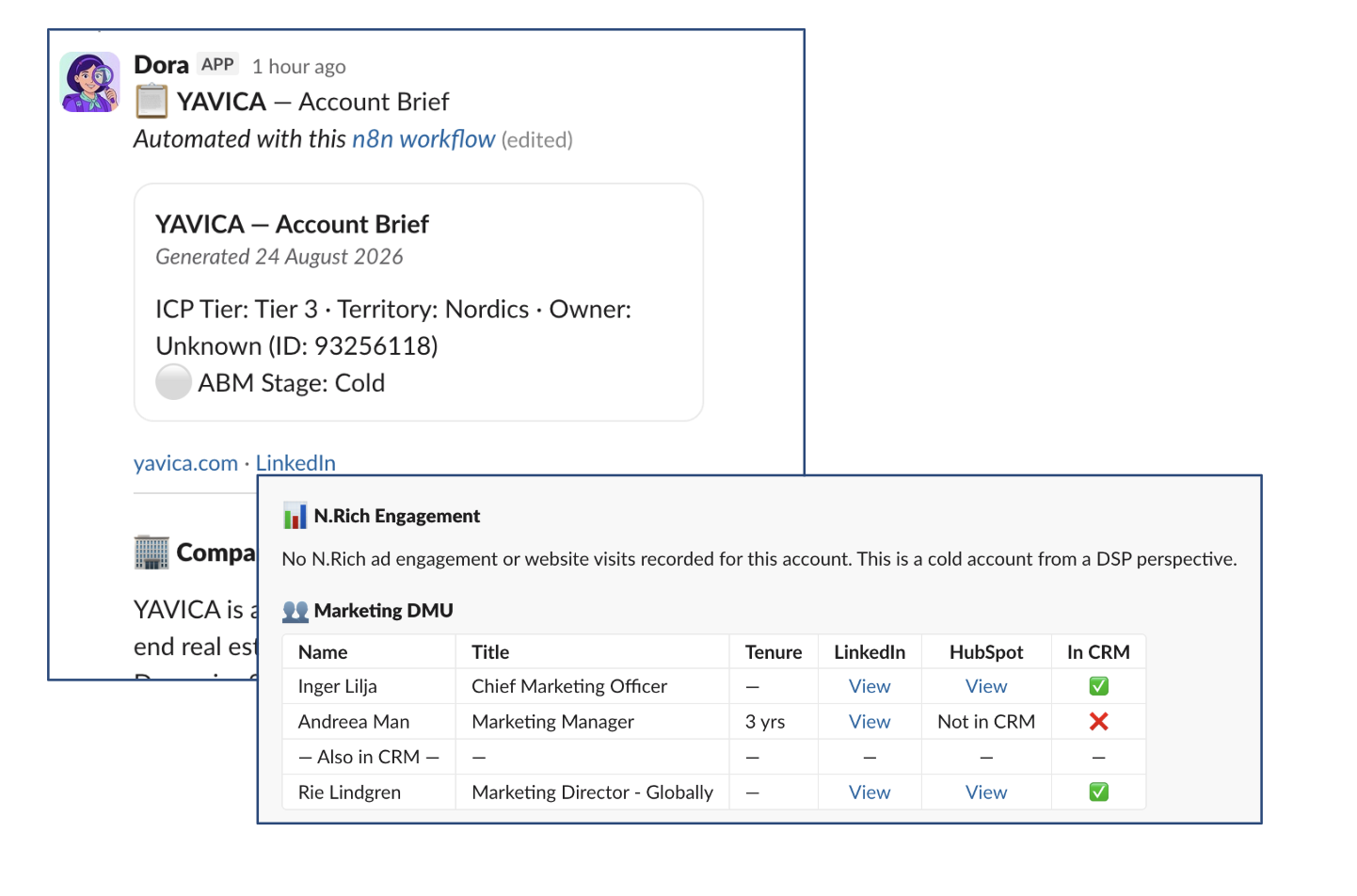
Dora is our research agent. She pulls CRM data on every event contact, enriches it with LinkedIn history, N.Rich ad engagement data, company size, and tech stack signals, and produces an account brief before every dinner. Anyone on the team can query her in Slack pre-event. She's the reason the "is this person ICP?" conversation basically never happens at the BDR level anymore.
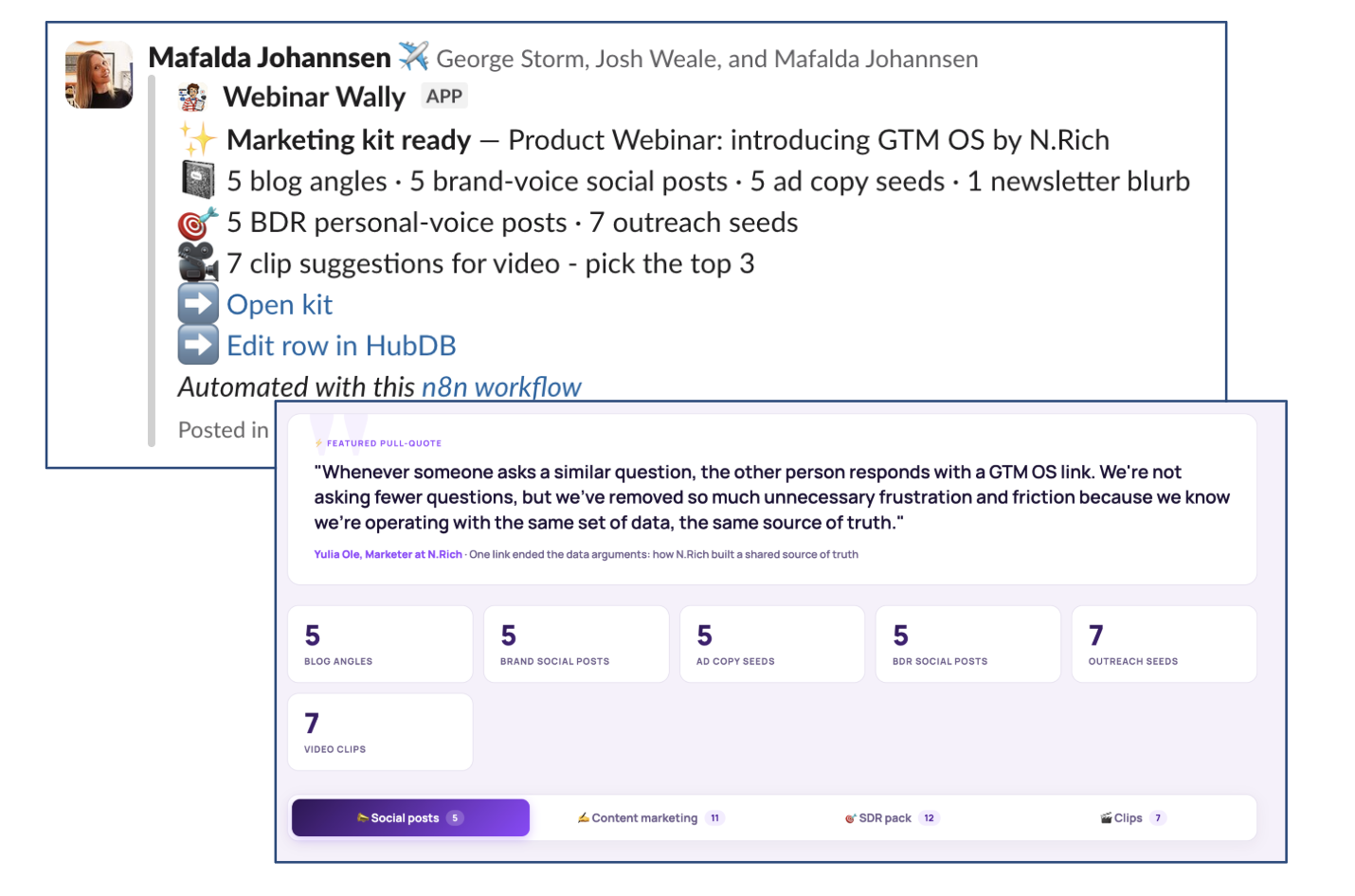 Wally is our webinar producer agent. He automates 90% of the post-webinar process: transcript, replay landing page, social posts, blog posts, video clips. The output lands in Slack. The human review layer handles anything customer-facing before it goes live. Wally handles the volume; the team handles the judgment calls.
The principle we've landed on: AI handles the repeatable work - the stuff that's time-sensitive, high-volume, and low-risk. Humans review anything that goes to a customer or prospect. Don't skip the human layer for customer-facing content.
How we use N.Rich in the event stack
N.Rich isn't only the product we sell. It's how our own event marketing runs. Here are three ways to use it to integrate events into your bigger ABM motion:
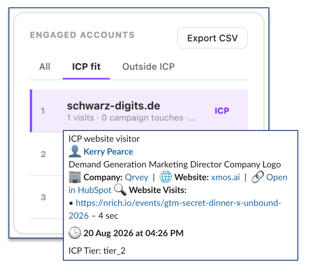
Account prioritisation. Always-on ABM campaigns on Tier 1-3 ICP accounts mean that by the time a BDR sends an event invitation, the account has already been exposed to N.Rich ads and content for months. The invitation lands in a warm context, not cold.
Pre-event campaign. Engaged or hot accounts - as defined by N.Rich intent signals - get pushed into a LinkedIn campaign with event-specific creative 4-6 weeks before any major event. You want your brand in their feed before the invitation arrives.
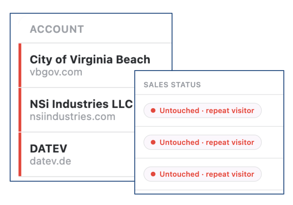
Post-event tracking. After the event, N.Rich shows which accounts are surging in intent - site visits, content engagement, ad interactions. That data becomes the BDR and AE follow-up priority list. Not who you "felt good about" at dinner - but who is actually showing buying signals.
The value: every account that attends a dinner or conference already has an intent history in N.Rich. When the AE follows up, they know which accounts have been warming in the background and which follow-ups are most likely to convert.
The pre-event checklist
Marketing:
- ICP definition locked and shared with sales + BDRs
- Event calendar built 4–6 months out with sales
- Conference claims validated (attendance, audience quality)
- Awareness campaigns running at least 4 weeks prior
- Seating plan prepared with prospect/customer/rep table mix
- AI content production pipeline set up for post-event
- Post-event follow-up owner per contact agreed in advance
Sales:
- AEs send personal invitations to their Tier 1 & 2 accounts
- Waitlist of 5–10 qualified standby contacts built
- Day-before reminder sent to all confirmed attendees
- Dora / account briefing run for every dinner attendee
- No pitching at the event, conversations only
- Gift + meeting request sent within 24 hours post-event
- CRM notes entered same day (hard rule, incl. C-level)
We covered all of this live in a webinar on August 24 with Jovana Stankovic (Field Marketing Manager), Mafalda Johannsen (Director of Commercial Strategy), Sara Storm (VP Sales EMEA), and Yulia Olennikova (Product Evangelist). The replay and the full playbook are available here: https://nrich.io/events/webinar-n.rich-event-playbook.
Create more pipeline and prove where it came from
Book an N.Rich demo and see how it works on your own data.
Book a demo![Step-by-Step ABM Workflow: How To Launch An ABM Marketing Pilot [Updated]](https://nrich.io/hubfs/abm-pilot-launch-hero.jpg)