Table of contents
Updated 10 November 2026
The best ABM software for 2027 depends on what your team must fix first. 6sense and Demandbase suit enterprise teams that can invest in setup and training. N.Rich suits teams that need ads, intent data and pipeline proof in one platform. HubSpot Marketing Hub suits teams that already run on HubSpot. AdRoll ABM suits mid-sized teams that start with advertising. Specialist tools cover one job each. Influ2 and Vector run ads to named contacts. Bombora and Common Room supply buyer signals. Dreamdata and HockeyStack handle attribution.
This guide compares 15 options on fit, pricing model and public reviews: nine ABM platforms and six specialist tools.
N.Rich publishes this guide, so our own platform is first on the list. Read that entry with our interest in mind. Every other entry uses the vendor's own site and public reviews, checked on 9 November 2026.
The 15 best ABM software platforms and tools at a glance
ABM platforms
| Platform | Best for | Pricing | G2 rating |
|---|---|---|---|
| N.Rich | Ads, intent data and pipeline proof in one platform | From $35,520 a year, plus ad spend | 4.7 (115 reviews) |
| 6sense | Predictive scoring across marketing and sales | Custom quote | 4.2 (1,594 reviews) |
| Demandbase | Buying-group programs at enterprise scale | Quote: platform fee plus a fee per user | 4.4 (2,024 reviews) |
| HubSpot Marketing Hub | Teams that already run on HubSpot CRM | From $800 a month | 4.4 (16,064 reviews) |
| ZoomInfo | Contact data and ABM in one contract | Custom quote by tier | 4.5 (3,516 reviews) |
| AdRoll ABM | Advertising-led ABM for mid-sized teams | Package quote | 4.3 (661 reviews) |
| Madison Logic | Content syndication with ABM media | Custom quote | 4.3 (275 reviews) |
| Foundry ABM | Technology marketers who want tech-media intent | Quote by use case | 4.2 (206 reviews) |
| Userled | Personalized LinkedIn ads and microsites | Plan quote | 4.7 (54 reviews) |
Specialist tools
| Tool | Best for | Pricing | G2 rating |
|---|---|---|---|
| Influ2 | Ads aimed at named people | Custom quote | 4.6 (172 reviews) |
| Vector | US programs built on named website visitors | From $36,000 a year | 4.9 (16 reviews) |
| Bombora | Intent data inside tools you already own | Custom quote | 4.4 (157 reviews) |
| Common Room | Joining buyer signals from many sources | From $2,500 a month | 4.5 (149 reviews) |
| Dreamdata | Attribution first, activation second | Free plan, then custom | 4.7 (280 reviews) |
| HockeyStack | Comparing attribution models and measuring lift | Custom quote | 4.4 (84 reviews) |
Each entry below explains how the platform buys and runs ads.
How we chose the platforms
We started with the products that buyers and AI assistants name most often for ABM. We kept the ones a B2B team can buy and run today. We split them into platforms that cover the whole ABM job and specialist tools that cover one part of it. We left out gifting tools and sales engagement tools, because they support an ABM program but do not run one.
Terminus is not on the list. It merged into DemandScience in November 2024, and DemandScience now sells managed programs instead of a platform you run yourself.
For each platform we read the vendor's product and pricing pages. We read public reviews on G2 and TrustRadius. Where a vendor publishes no price, we cite the median contract value that Vendr reports from its customers' purchases. Vendr is a software buying service, so treat its figures as a benchmark, not a quote.
Nine ABM platforms
These nine products cover account selection, activation and measurement in one platform.
1. N.Rich: best for ads, intent data and pipeline proof in one platform
N.Rich is an ABM platform that combines intent data, account-based advertising and reporting. It scores target accounts on intent across more than 18,000 topics in 12 languages. It runs four ad formats that only your target accounts see. You pay for an ad only when someone at a target account engages with it.
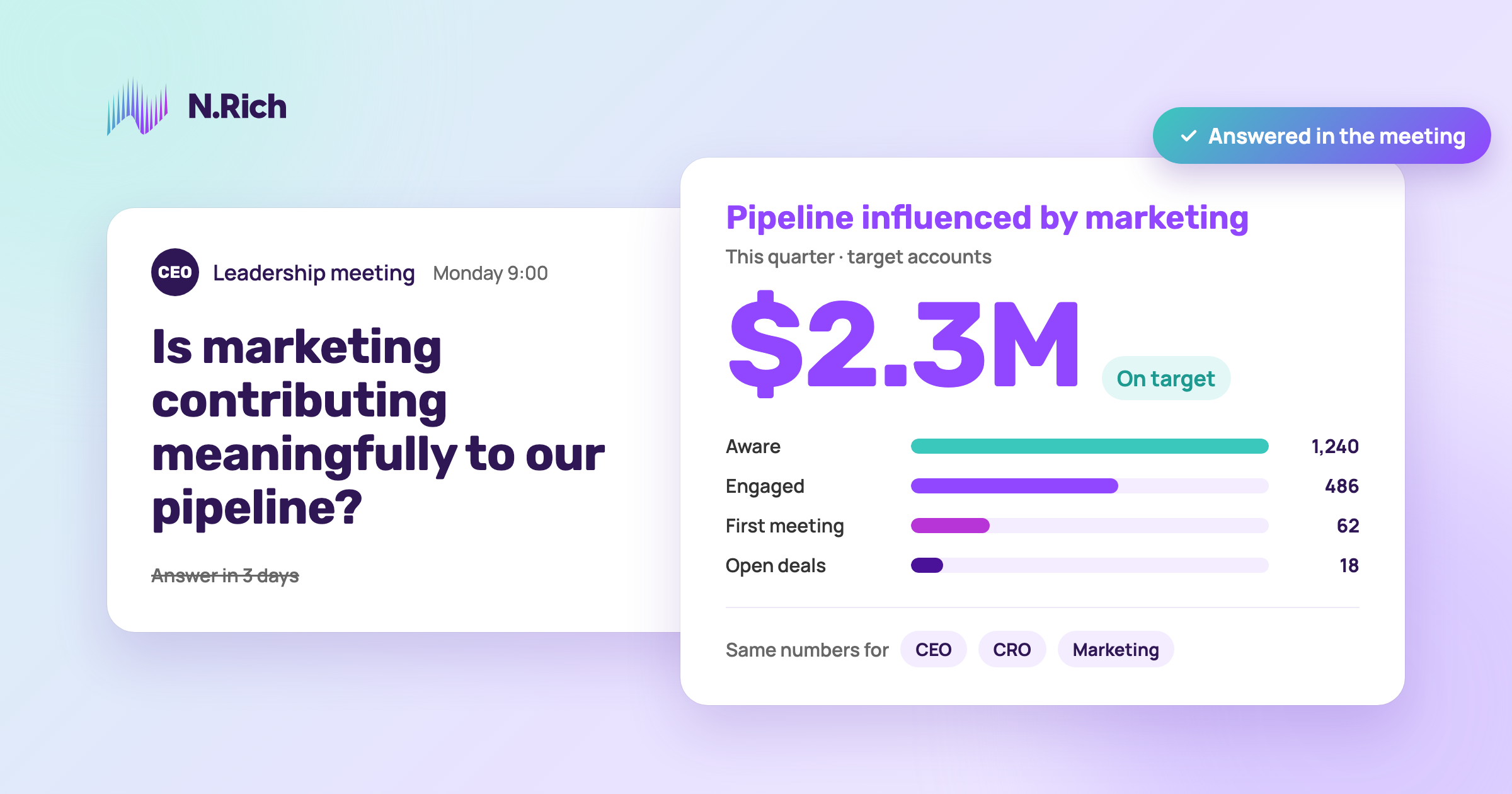
Every signal syncs to Salesforce or HubSpot, and sales reps get alerts in the CRM. Opportunity attribution is included in every plan. N.Rich AI reports on the joined CRM, ad and intent data, so each pipeline number traces back to a CRM record.
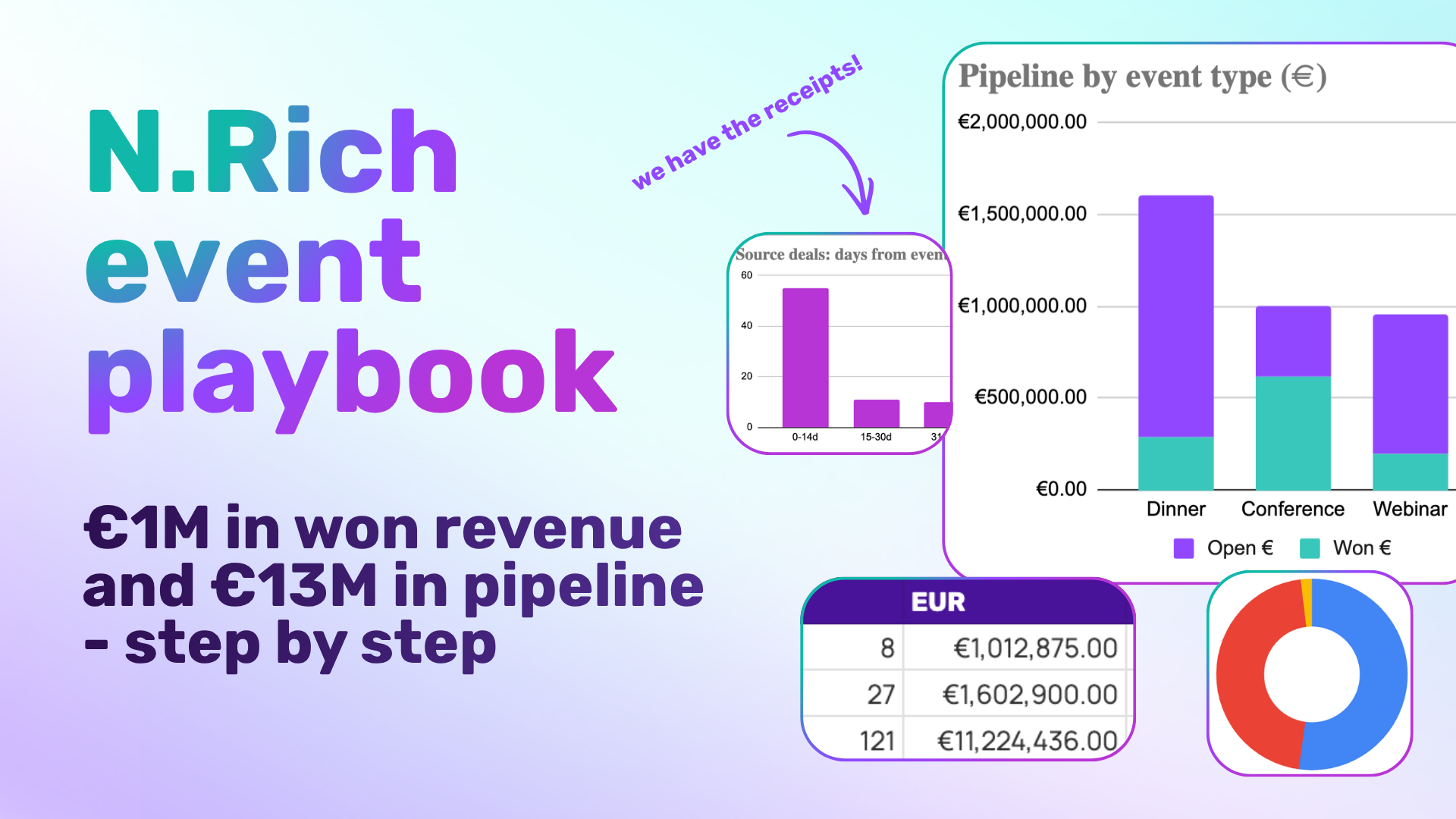
Virta created €13M in pipeline with N.Rich and saw 6x win rates. EHS Insight saw up to 270% better win rates and a 2.7x shorter sales cycle.
What reviewers say
N.Rich holds 4.7 out of 5 on G2 from 115 reviews. Reviewers like the account-level intent signals, which help sales teams decide which accounts to work. They praise the easy setup and the support team.
Reviewers ask for more visibility into why an account's intent score spikes. Some note a learning curve during initial setup.
Pricing
GTM Scale costs $35,520 a year and GTM Command costs $57,240 a year. GTM Enterprise is priced with you. Every plan includes unlimited users. Ad spend is separate and comes in prepaid packs, and unspent ad spend rolls over. See N.Rich pricing.
Not the right fit if
- You want high-volume lead generation from individual contacts.
- You sell to small businesses at low deal sizes.
- Your sales team needs ad engagement by named person. N.Rich reports ad engagement by account.
- You want a free plan.
2. 6sense: best for predictive scoring across marketing and sales
6sense is an intelligence platform for marketing and sales teams. It combines intent data with predictive scoring, then activates accounts through ads, email and workflows. It runs its own DSP and also syncs audiences to Google, LinkedIn and Meta.
Its intent model adds Bombora, G2 and TrustRadius data to its own network data. Scores cover profile fit, intent and buying stage. On 3 November 2026 the company rebranded around agentic GTM and announced new AI agents in beta.
What reviewers say
6sense holds 4.2 out of 5 on G2 from 1,594 reviews. Reviewers say the scores and buying stages help them prioritize accounts. They say the intent data spots interest before a buyer makes contact.
Reviewers flag a learning curve and a heavy setup. TrustRadius reviewers question intent accuracy and ask for more transparency in the model. Some say the cost is hard to justify.
Pricing
6sense publishes no price and sells by custom quote. Its free plan ended on 12 August 2026. Vendr reports a median contract of $62,220 a year.
Not the right fit if
- You need a published price before you talk to sales.
- You want to start without a learning curve.
See how the two compare on our 6sense alternatives page.
3. Demandbase: best for buying-group programs at enterprise scale
Demandbase is an ABM platform built around accounts and buying groups. It uses signals and buying-group activity to prioritize accounts for marketing, sales and advertising. It owns a B2B DSP and also runs ads on LinkedIn, Google, Meta and Bing.
Its intent data comes from its own DSP, with imports from Bombora, G2, TrustRadius and TechTarget. In April 2026 it relaunched the product as Demandbase AI. It added an AI agent called Mojo in September 2026.
What reviewers say
Demandbase holds 4.4 out of 5 on G2 from 2,024 reviews. Reviewers like the single view of accounts and intent. They praise the CRM and LinkedIn integrations.
Reviewers flag a steep learning curve and a dense interface. Reporting and attribution score lowest among its features on G2. TrustRadius reviewers mention thin person-level data.
Pricing
Demandbase charges a platform fee plus a flat fee per user. It publishes no price. Vendr reports a median contract of $68,591 a year.
Not the right fit if
- You want every sales rep to have access without a fee per user.
- You need a small team to run the platform without training time.
See how the two compare on our Demandbase alternatives page.
4. HubSpot Marketing Hub: best for teams that already run on HubSpot CRM
HubSpot Marketing Hub includes ABM tools inside HubSpot's CRM. Teams flag target accounts, tier them and work from shared account views. Buyer Intent shows which companies visit your site and which companies research your topics. Company scores combine fit and engagement.
HubSpot has no DSP. It syncs company segments to LinkedIn Ads as audiences. ABM dashboards come with the tools, and multi-touch attribution needs the Enterprise tier.
What reviewers say
HubSpot Marketing Hub holds 4.4 out of 5 on G2 from 16,064 reviews. That figure covers the whole product, not the ABM tools alone. Reviewers like the interface, the number of tools in one platform and the reporting.
Reviewers flag a learning curve and the price for small teams. They say useful features sit in higher tiers or paid add-ons.
Pricing
HubSpot publishes its prices. Marketing Hub Professional costs $800 a month, billed annually, plus a $3,000 onboarding fee. Enterprise costs $3,600 a month plus a $7,000 onboarding fee. The ABM tools need Professional or Enterprise.
Not the right fit if
- Your CRM is not HubSpot.
- You want to buy display or video ads inside your ABM platform.
Some teams run HubSpot with a dedicated ABM platform. N.Rich has a two-way HubSpot integration.
5. ZoomInfo: best for contact data and ABM in one contract
ZoomInfo sells ABM as part of its go-to-market data platform. ZoomInfo Marketing, now part of GTM Studio, works at contact level. It builds audiences from ZoomInfo's contact data, intent topics and website visits.
It runs its own DSP and retargets on LinkedIn, Meta and Google. Scoring includes an account fit score and a predictive in-market score. Sales alerts go to Slack and Microsoft Teams.
What reviewers say
ZoomInfo's marketing product holds 4.5 out of 5 on G2 from 3,516 reviews. The G2 page combines reviews for several ZoomInfo products. Reviewers like the contact and account data. They say audiences are quick to build.
Reviewers flag the price for small teams and say the product is hard to navigate. Some report weaker data for international and mobile contacts.
Pricing
ZoomInfo sells by quote. Its pricing page names three marketing tiers and shows no prices. The tiers differ by credits and by the number of intent topics. Vendr reports a median contract of $33,500 a year across all ZoomInfo products.
Not the right fit if
- You already have a contact data provider and need ABM only.
- Most of your target contacts are outside North America.
6. AdRoll ABM: best for advertising-led ABM in mid-sized teams
AdRoll ABM is the new name for RollWorks. NextRoll renamed the product on 27 August 2025, and the platform itself did not change. It combines account lists, buyer signals and advertising on a built-in DSP.
Ads run across display, native, video, social and connected TV. Intent data comes from Bombora, G2 and AdRoll's own keyword data. Each account gets an ICP fit grade from A to F. Sales reps get an email when an account's activity spikes.
What reviewers say
AdRoll ABM holds 4.3 out of 5 on G2 from 661 reviews. Reviewers like the easy setup and the account targeting. They praise the support team and account managers.
Reviewers flag a learning curve on playbooks. They want more reporting options and filters. Some report friction in the CRM integration.
Pricing
AdRoll lists four packages. The three ABM packages need a demo and show no price. The fourth package, account-based retargeting, has no platform fee, and you pay for media only.
Not the right fit if
- You need deep reporting and attribution.
- You want to see prices before a demo.
See how the two compare on our RollWorks alternatives page.
7. Madison Logic: best for content syndication with ABM media
Madison Logic combines content syndication with ABM advertising for enterprise marketers. Campaigns run across content syndication, display, connected TV, audio and LinkedIn Ads. Its intent data, ML Insights, blends its own engagement data with third-party research data.
Accounts and personas get AI scores. Reporting covers engagement by buying group. Integrations include Salesforce, Marketo, HubSpot, Gong and Adobe Experience Platform.
What reviewers say
Madison Logic holds 4.3 out of 5 on G2 from 275 reviews. Reviewers like the account managers and the intent signals. They report good lead quality from named target accounts.
Reviewers flag a high cost per lead. Some say leads do not recognize the sender at follow-up. They want more ways to customize the dashboards.
Pricing
Madison Logic publishes no price and sells by custom quote.
Not the right fit if
- You do not use content syndication.
- You want a published price.
8. Foundry ABM: best for technology marketers who want tech-media intent
Foundry ABM is the former Triblio platform. Foundry publishes technology titles such as CIO, CSO and Computerworld, and its intent data comes from those audiences. The platform combines display and social ads, website personalization and 1:1 landing pages.
It scores accounts with AI and identifies visiting companies by IP address. Sales teams see the insights in the CRM. Regent bought Foundry from IDG in March 2025.
What reviewers say
Foundry ABM holds 4.2 out of 5 on G2 from 206 reviews. Many of those reviews date from the Triblio years. Reviewers like having intent-driven scoring in one hub. They praise the CRM integration and the customer success team.
Reviewers flag a cluttered interface and a steep learning curve. They want more depth in reporting and attribution. Some say the cost is high for smaller teams.
Pricing
Foundry says pricing depends on your use case. It publishes no price.
Not the right fit if
- Your buyers do not read technology media. Foundry's own intent data comes from its technology titles.
- Your team is small and sensitive to price.
9. Userled: best for personalized LinkedIn ads and microsites
Userled turns a target account list into personalized LinkedIn ads, microsites and sales pages. It describes itself as an ABM activation platform. It has no DSP. It creates ads for each account and syncs them to LinkedIn.
Its microsites identify visitors, and Slack alerts tell sales when an account engages. Userled 2.0 launched on 4 November 2026.
What reviewers say
Userled holds 4.7 out of 5 on G2 from 54 reviews. Reviewers like how fast they can create personalized ads and microsites. They praise the customer success team. They like having ads and microsites in one platform.
Reviewers say the release pace is hard to keep up with. They flag a learning curve on advanced personalization. Some report occasional glitches in the LinkedIn integration.
Pricing
Userled publishes no price. Its LinkedIn Ads and Microsites plans include unlimited seats and accounts. Its Enterprise plan has custom pricing.
Not the right fit if
- Your program does not run on LinkedIn.
- You want to buy display or video ads inside your ABM platform.
Six specialist tools buyers compare with ABM platforms
These six tools focus on one job: ads to named contacts, buyer signals or attribution. Buyers often compare them with an ABM platform or run them next to one.
10. Influ2: best for ads aimed at named people
Influ2 runs contact-level advertising. It serves ads to named people at target accounts and shows which of them saw or clicked an ad. It has no ad network of its own. Ads run on LinkedIn, Facebook, Instagram, Google, Bing and Amazon.
Its Audienscope add-on provides intent signals at contact level. Signals go to Slack, Microsoft Teams, Salesforce, HubSpot, Salesloft and Outreach. Website visitor identification entered beta in May 2026 and covers US traffic only.
What reviewers say
Influ2 holds 4.6 out of 5 on G2 from 172 reviews. Reviewers like seeing which named contacts viewed or clicked an ad. They praise the support team. They like signals that arrive in the CRM or Slack.
Reviewers flag a learning curve for cohorts and journeys. They say audience changes wait for the next monthly cycle. They want better reporting by channel.
Pricing
Influ2 publishes no price. Vendr reports a median contract of about $60,000 a year. Audienscope is a paid add-on.
Not the right fit if
- You do not yet know every person in the buying group.
- Your sales team does not work from a named contact list.
See how the two compare on our Influ2 alternatives page.
11. Vector: best for US programs built on named website visitors
Vector (vector.co) describes itself as an ABM platform built on contact-level signals. It scores accounts and syncs audiences to LinkedIn, Google Ads, Meta, Reddit, X and Bing. It has no DSP, so ad costs follow each platform you sync to.
Vector publishes match rates of up to 90% on LinkedIn and up to 45% on Google Ads and Meta. Its website identification works at contact level in the US and at account level in the EU.
What reviewers say
Vector holds 4.9 out of 5 on G2 from 16 reviews, which is a small base. Reviewers like the easy setup and the interface. They like contact-level visitor data that syncs to the CRM and Slack.
Reviewers ask for more integrations.
Pricing
Vector plans start at $36,000 a year with unlimited seats. The plan depends on your monthly site visitors and your total monthly ad spend.
Not the right fit if
- Most of your target accounts are outside the US.
- You want one platform to deliver the ads.
See how the two compare on our Vector alternatives page.
12. Bombora: best for intent data inside tools you already own
Bombora describes itself as a data company, not a platform. Its Company Surge data shows which accounts research a topic more than usual. The data comes from a co-operative of publisher sites that carry Bombora's tag. It covers more than 25,300 topics.
Bombora has no DSP. It sends audiences to ad platforms such as DV360, The Trade Desk and LinkedIn. Surge data syncs weekly to Salesforce and HubSpot. Several platforms in this guide use Bombora data, including 6sense, Demandbase and AdRoll ABM.
What reviewers say
Bombora holds 4.4 out of 5 on G2 from 157 reviews. Reviewers like the range of topics. They say the data helps them prioritize accounts that are in market. They praise the onboarding and support.
Reviewers flag that the data stops at account level. They mention cost and a learning curve. Some say reports need spreadsheet exports and manual uploads to LinkedIn.
Pricing
Bombora publishes no price. Vendr reports a median contract of $25,000 a year.
Not the right fit if
- You want one tool that also runs campaigns and reports on pipeline.
See how the two compare on our Bombora alternatives page. For more intent data options, read our guide to B2B intent data providers.
13. Common Room: best for joining buyer signals from many sources
Common Room is a buyer intelligence platform. It joins signals from many sources with identity data at person level. Zoom acquired the company in July 2026.
It tracks more than 50 signal types and adds Bombora, G2, 6sense and Demandbase data through integrations. It has no DSP. It pushes matched audiences to LinkedIn Ads and reads ad impressions and clicks back. Website visitor identification reaches person level for US traffic. Alerts and workflows are unlimited on every plan.
What reviewers say
Common Room holds 4.5 out of 5 on G2 from 149 reviews. Reviewers like one view of signals across community, social and code sources. They like the website visitor identification and the support.
Reviewers flag some inaccurate contact data. Some report issues with the HubSpot sync. They say some signals are not specific enough.
Pricing
Common Room publishes one price. The Essential plan costs $2,500 a month, billed annually, with five seats. Advanced and Enterprise plans are custom. Vendr reports a median contract of $25,000 a year.
Not the right fit if
- You want the tool to buy media. Common Room says it is not a media-buying tool.
- You need one platform to run ABM campaigns end to end.
14. Dreamdata: best for attribution first, activation second
Dreamdata is a B2B attribution platform. It joins CRM, ad and website data into an account-based model. It shows the customer journey tied to revenue. It offers multi-touch and custom attribution models.
Audience Hub syncs audiences to LinkedIn, Google, Meta and Microsoft Ads and sends conversions back. Dreamdata has no DSP, so you buy and run the media in those platforms. It stores data in EU data centers.
What reviewers say
Dreamdata holds 4.7 out of 5 on G2 from 280 reviews. Reviewers like the full journey view tied to pipeline and revenue. They use the attribution models to justify budget moves. They like the audience and conversion syncs.
Reviewers flag a learning curve with stage models. Some question the accuracy of the firmographic data. They want more ways to customize reports.
Pricing
Dreamdata has a Free plan at $0 a month. Paid plans have custom pricing. Vendr reports a median contract of $35,440 a year.
Not the right fit if
- You want the platform to buy and run your ads.
- You need an ABM platform more than an attribution tool.
See how the two compare on our Dreamdata alternatives page.
15. HockeyStack: best for comparing attribution models and measuring lift
HockeyStack is an attribution and buyer-journey analytics platform. It unifies marketing and sales data. It offers nine attribution models and lift reports. In April 2026 it announced new funding and a move toward AI revenue agents for enterprise teams.
It has no DSP. It syncs audiences to LinkedIn and Google. It identifies website visitors and scores accounts on intent. Its integrations include 6sense, Demandbase and Bombora.
What reviewers say
HockeyStack holds 4.4 out of 5 on G2 from 84 reviews. Reviewers like switching between attribution models quickly. They like the lift reporting and the no-code dashboards.
Recent reviewers flag a slow setup with manual data mapping. Some question the reliability of the AI answers.
Pricing
HockeyStack publishes no price on its site. Vendr reports a median contract of $29,702 a year.
Not the right fit if
- You want the platform to buy and run your ads.
- You need an ABM platform more than an analytics tool.
How to choose ABM software based on your needs
Start with the job you most need done. Then check the pricing model and who will run the tool.
| Your need | Start with |
|---|---|
| Ads, intent data and reporting in one contract | N.Rich, 6sense, Demandbase, AdRoll ABM |
| ABM inside the CRM you already use | HubSpot Marketing Hub |
| Contact data and ABM from one vendor | ZoomInfo |
| Personalized LinkedIn ads and microsites | Userled |
| Ads aimed at named people | Influ2, Vector |
| Intent data and buyer signals for a stack you already have | Bombora, Common Room |
| A named attribution model for finance | Dreamdata, HockeyStack |
| Content syndication at enterprise scale | Madison Logic |
| Intent from technology media | Foundry ABM |
Ask every vendor on your shortlist these four questions:
- What do we pay when nobody engages with our ads?
- Where does the intent data come from, and can we see why an account scored high?
- Can sales see the account signals inside the CRM?
- What sits outside the license: ad spend, user fees and onboarding?
Frequently asked questions
What is the best ABM platform for mid-market B2B companies?
No single ABM platform is best for every mid-market team. The right one matches your CRM, your ad budget and the people you have to run it. A platform that needs a dedicated operations team can sit unused in a smaller company. Mid-market teams often shortlist N.Rich, AdRoll ABM and HubSpot Marketing Hub.
How much does ABM software cost?
Few ABM vendors publish a price. N.Rich plans start at $35,520 a year, Vector plans start at $36,000 a year, and Common Room's Essential plan costs $2,500 a month. Most other vendors quote on request. Vendr reports median contracts between $25,000 and $68,591 a year for eight vendors in this guide. Ask each vendor what sits outside the license: ad spend, user fees and onboarding.
What is the difference between ABM software and an ABM platform?
People use the two terms for the same thing. Both describe software that helps a team pick target accounts, reach them and measure the result. "ABM platform" usually means one product that covers all three jobs. "ABM software" also includes specialist tools, such as intent data or attribution, that cover one job. This guide lists both kinds.
Which ABM platforms work with HubSpot?
Most ABM platforms connect to HubSpot. In this guide, 6sense, Demandbase, ZoomInfo, AdRoll ABM, Influ2, Madison Logic, Foundry ABM, Bombora, Common Room, Dreamdata and HockeyStack all name a HubSpot integration. The depth differs. Check whether data flows both ways and whether sales can see account signals inside HubSpot. N.Rich has a two-way HubSpot integration.
Which ABM platform is best for European B2B companies?
European teams need three things from an ABM platform: intent data in local languages, coverage of European accounts and a clear position on consent. Ask each vendor where it stores data and who handles consent. N.Rich tracks intent in 12 languages and serves teams in Europe and North America. Dreamdata stores data in EU data centers, and HubSpot offers EU hosting in Germany.
What is a cheaper alternative to 6sense or Demandbase?
Vendr reports median contracts above $60,000 a year for both 6sense and Demandbase. N.Rich plans start at $35,520 a year with unlimited users, plus ad spend. AdRoll ABM, Foundry ABM and Madison Logic quote on request, so ask each for a first-year total. Compare the full first-year cost, including ad spend and onboarding.
What happened to Terminus?
Terminus merged into DemandScience on 12 November 2024, and the Terminus brand has gone. DemandScience now sells managed ABM and demand programs run by its own team. Its site says there is no software to buy. Teams that ran Terminus themselves now need a different product. Our Terminus alternatives page compares the options.
See how N.Rich fits your target accounts
If N.Rich is on your shortlist, check the pricing or book a demo.
N.Rich and the other companies named in this guide are separate companies. Each product name is a trademark of its owner. This guide uses information each company publishes, public reviews on G2 and TrustRadius, and contract benchmarks from Vendr. Features and prices change, so check them with each vendor. Checked 9 November 2026.
Create more pipeline and prove where it came from
Book an N.Rich demo and see how it works on your own data.
Book a demo
Josh is Demand Generation Manager at N.Rich, a former ABM consultant, and a firm believer that pipeline beats vanity metrics in every fight it's ever been in. He works across paid media, marketing ops and content, prefers building systems that create revenue over dashboards that describe it.
Table of contents
Stop building dashboards
Build apps that answer the questions your team actually asks. See what's possible in the N.Rich AI Playground.
Try the Playground
Josh is Demand Generation Manager at N.Rich, a former ABM consultant, and a firm believer that pipeline beats vanity metrics in every fight it's ever been in. He works across paid media, marketing ops and content, prefers building systems that create revenue over dashboards that describe it.